Montessori education helps children develop confidence, independence, problem solving skills, creativity, and a love for learning through hands on activities and child centered teaching. The Montessori method allows children to explore at their own pace while teachers guide them through carefully designed learning experiences that support early childhood development.
Introduction
Choosing the right educational approach for a young child is an important decision for many parents. During the early years, children develop habits, social skills, confidence, and learning patterns that can influence their future growth. Parents often look for an environment where their child can learn new concepts while also becoming more independent and curious.
Montessori education is a child focused approach that encourages children to explore, make choices, and learn through practical experiences. Developed by Dr. Maria Montessori, this method focuses on respecting each child’s individual learning pace and creating an environment where children can build skills naturally.
The benefits of Montessori education go beyond academic learning. A Montessori classroom helps children develop concentration, responsibility, communication skills, creativity, and confidence through structured activities and supportive guidance.
For families exploring early childhood education options, understanding how the Montessori method works can help them make informed decisions about their child’s learning journey.
What Is Montessori Education and How Does It Work?
Montessori education is an early childhood learning approach based on independence, hands on learning, and respect for a child’s natural development. It was created by Italian physician and educator Dr. Maria Montessori in the early 1900s.
Unlike traditional classroom models where every child follows the same activity at the same time, Montessori classrooms allow children to choose activities based on their interests and developmental stage. Teachers act as guides who introduce materials, observe progress, and support learning when needed.
A Montessori classroom usually includes specially designed learning materials that help children understand concepts through physical interaction. For example, children may learn counting by using concrete objects before moving toward abstract numbers.
The Montessori method focuses on several important principles:
• Learning through hands on experiences
• Encouraging independence and responsibility
• Respecting individual learning speeds
• Developing concentration through meaningful activities
• Supporting social and emotional growth
This approach creates a learning environment where children become active participants rather than passive listeners.
Why Are Montessori Education Benefits Important for Early Childhood Development?
Montessori education supports many areas of child development because it combines academic learning with practical life experiences. Young children do not only need information; they also need opportunities to practice skills, solve problems, and build confidence.
Montessori Education Builds Independence
One of the most recognized benefits of Montessori learning is the development of independence. Children are encouraged to complete tasks on their own, make choices, and take responsibility for their classroom activities.
Simple activities such as arranging materials, preparing snacks, cleaning up after work, and organizing personal belongings help children understand responsibility.
When children successfully complete tasks independently, they develop confidence in their own abilities. This sense of achievement can encourage them to take on new challenges.
Montessori Learning Improves Concentration and Focus
Young children naturally have short attention spans, but Montessori activities are designed to encourage deeper concentration. Children often work with materials that match their interests and abilities, allowing them to remain engaged for longer periods.
For example, a child working with puzzles, sorting activities, or practical life materials learns to focus on completing a task step by step.
This ability to concentrate can support future academic learning because children develop patience and persistence.
Montessori Encourages Problem Solving Skills
Montessori classrooms encourage children to think independently rather than simply memorize answers. Many Montessori materials are designed so children can discover mistakes and correct them through exploration.
For example, when working with a matching activity, a child learns to identify differences, test solutions, and adjust their approach.
These experiences help children develop critical thinking skills that are valuable throughout life.
How Does a Montessori Classroom Support Child Learning?
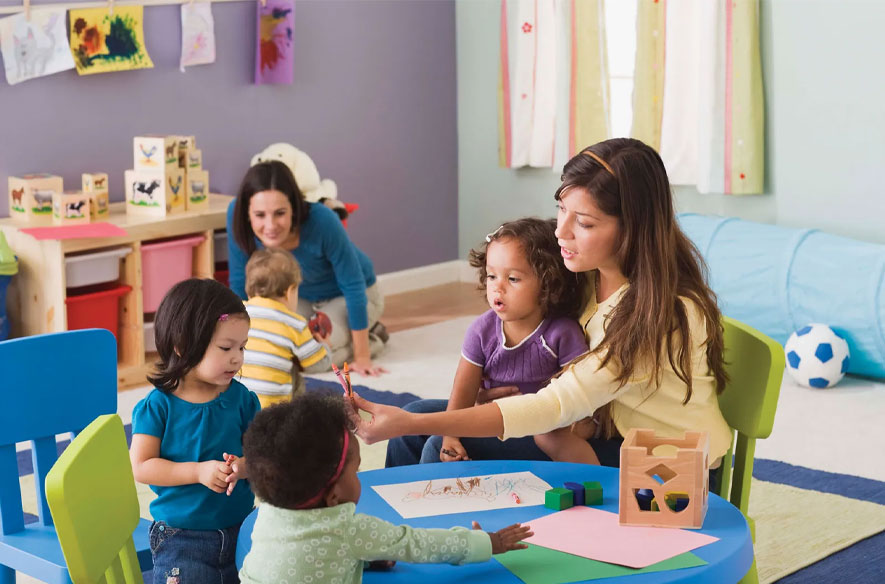
A Montessori classroom is carefully prepared to support exploration and development. Every part of the environment has a purpose, from the learning materials to the classroom arrangement.
The Prepared Environment
The Montessori prepared environment is designed to help children access materials independently. Furniture, shelves, and activities are usually arranged according to children’s size and abilities.
A well organized classroom allows children to make choices while maintaining structure and order.
The Role of Montessori Teachers
Montessori teachers do not simply deliver information through lectures. Their role is to observe children, introduce appropriate activities, and provide guidance.
Teachers understand that every child develops differently. They support children by offering encouragement and creating opportunities for growth.
Hands On Learning Materials
Montessori materials help children understand concepts through physical experiences.
Examples include:
• Number materials for early mathematics
• Language tools for reading development
• Practical life activities for daily skills
• Sensory materials for exploring differences in size, shape, and texture
These materials help children connect ideas with real world experiences.
What Skills Do Children Develop Through Montessori Education?
Montessori learning supports a wide range of skills that contribute to overall child development.
| Skill | How Montessori Supports It |
|---|---|
| Independence | Children complete activities and daily tasks themselves |
| Confidence | Children gain confidence by solving problems and completing work |
| Communication | Group activities encourage cooperation and interaction |
| Creativity | Open ended activities encourage imagination |
| Concentration | Individual work develops focus and patience |
| Responsibility | Children learn to care for materials and their environment |
These skills support children not only during preschool years but also as they continue their educational journey.
Montessori Education vs Traditional Preschool: What Is the Difference?
Both Montessori education and traditional preschool programs aim to support children’s growth, but their teaching approaches can differ.
| Montessori Education | Traditional Preschool |
|---|---|
| Child chooses activities within a structured environment | Teacher often directs activities |
| Focuses on individual learning pace | Often follows group schedules |
| Uses specialized Montessori materials | Uses a variety of classroom resources |
| Encourages independence | Often focuses on teacher led instruction |
| Learning happens through exploration | Learning often follows planned lessons |
Neither approach is identical for every child. Parents should consider their child’s personality, learning style, and educational needs when choosing a program.
Common Misunderstandings About Montessori Education
Montessori Is Only About Playing
Montessori activities may look like play because children interact with materials, but each activity has a learning purpose. Materials are carefully designed to support specific developmental skills.
Montessori Children Learn Without Guidance
Montessori classrooms are structured environments. Teachers carefully observe children and introduce activities that support their progress.
Montessori Does Not Include Academic Learning
Montessori education includes language, mathematics, science, geography, and other academic areas. The difference is that children often learn concepts through exploration and practical experiences.
How Can Parents Support Montessori Learning at Home?
Parents can continue Montessori principles outside the classroom by creating opportunities for independence.
Helpful practices include:
• Allowing children to complete simple daily tasks
• Providing age appropriate choices
• Encouraging curiosity and questions
• Creating organized spaces where children can access items safely
• Supporting reading and exploration activities
A supportive home environment can strengthen the skills children develop through Montessori learning.
What Should Parents Look For in a Montessori School?
When choosing a Montessori program, parents should consider several factors.
Important areas to review include:
• Qualified and experienced educators
• A safe and organized classroom environment
• Age appropriate Montessori materials
• Positive teacher and child interactions
• Opportunities for social and emotional development
Parents may also visit classrooms, ask questions, and observe how teachers interact with children before making a decision.
Key Takeaways
• Montessori education supports independence, confidence, creativity, and problem solving skills.
• The Montessori method uses hands on learning and child centered teaching.
• Montessori classrooms encourage children to explore while receiving guidance from trained educators.
• Early childhood learning is not only about academics but also about developing life skills.
• Parents can support Montessori principles through daily activities at home.
Frequently Asked Questions
What are the main benefits of Montessori education?
Montessori education helps children develop independence, confidence, concentration, creativity, and problem solving abilities. The approach encourages children to learn through hands on experiences while developing social and emotional skills in a supportive environment.
Is Montessori good for preschool children?
Yes, Montessori education is commonly used for preschool aged children because it supports early development through practical activities, language learning, mathematics, and social interaction. The approach allows children to learn at a pace that matches their developmental needs.
How does Montessori education build independence?
Montessori builds independence by allowing children to complete meaningful tasks themselves. Activities such as organizing materials, practical life exercises, and self directed learning help children become more confident in their abilities.
What makes Montessori different from traditional education?
Montessori education focuses on child centered learning, individual progress, and hands on experiences. Traditional education often follows a teacher led structure, while Montessori classrooms allow children to explore within a carefully prepared environment.
Does Montessori improve creativity?
Montessori encourages creativity by allowing children to explore ideas, solve problems, and use materials in meaningful ways. Children are encouraged to think independently instead of only following fixed instructions.
What age is best to start Montessori education?
Many Montessori programs accept children during the toddler and preschool years. The best age depends on the child’s development, readiness, and family goals.
How do Montessori teachers support children?
Montessori teachers observe each child’s progress, introduce suitable activities, and provide guidance when needed. Their role is to support learning while encouraging children to become independent.
Can Montessori learning continue at home?
Yes, parents can apply Montessori principles at home by encouraging independence, creating organized spaces, and involving children in age appropriate daily activities.
Conclusion
Montessori education provides children with more than early academic knowledge. It helps them develop confidence, independence, curiosity, and essential life skills through meaningful learning experiences.
By understanding the Montessori approach, parents can make more informed choices about their child’s early education journey. A supportive learning environment during the early years can help children build strong foundations for future growth.
Little Einsteins Montessori LLC provides a nurturing environment where children can explore, learn, and develop important skills through a child centered educational approach. Parents interested in learning more about Montessori opportunities can connect with the team to understand how the program supports children’s development.