Montessori preschool lets children choose activities at their own pace using hands on materials, while traditional preschool follows a fixed schedule led mostly by the teacher. Montessori classrooms mix age groups and focus on independence and practical life skills. Traditional programs usually group children by age and follow a more structured curriculum built around group lessons.
Why This Decision Matters to Parents
Choosing between Montessori and a traditional preschool is one of the first real decisions a parent makes about their child’s education. It shapes how a toddler learns to think, solve problems, and interact with others during a period when the brain is developing faster than at almost any other point in life.
Parents searching for this comparison are usually weighing a few things: how their child learns best, what daily structure looks like, and which approach actually prepares kids for kindergarten. This guide breaks down the real differences so you can make a decision based on how your specific child learns, not just marketing language.
What Is Montessori Education?
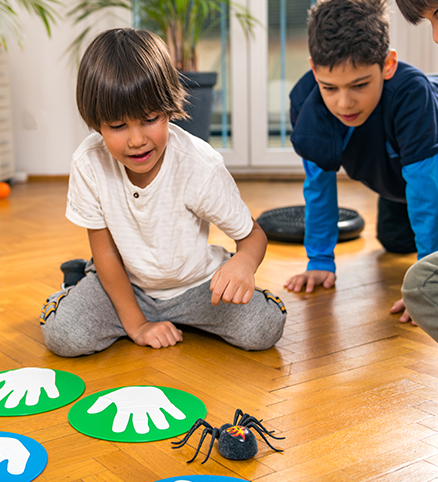
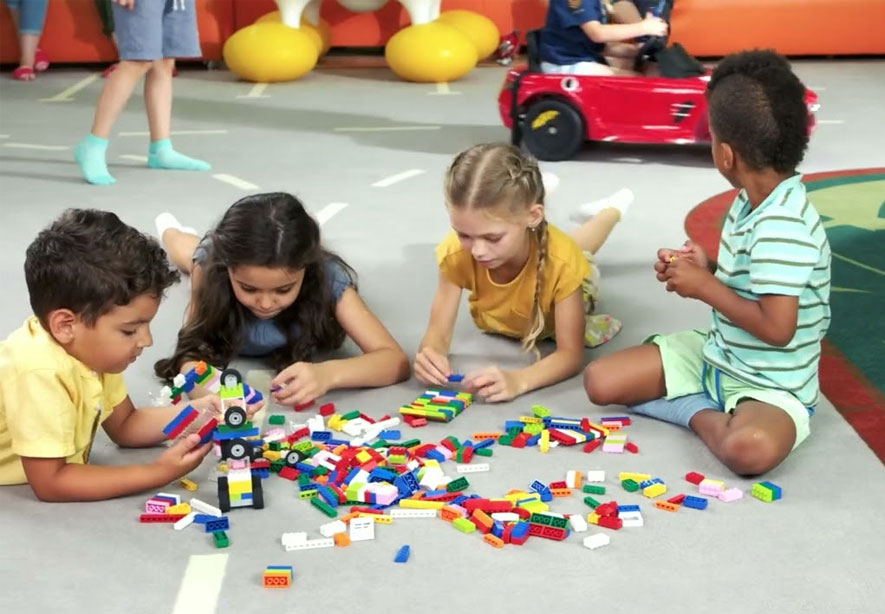
Montessori is an educational method developed by Dr. Maria Montessori in the early 1900s, built around the idea that children learn best through self directed activity, hands on materials, and collaborative play. Classrooms are designed so children can explore practical life skills, sensory materials, early math, and language at their own pace.
Key features of a Montessori classroom include:
- Mixed age groups, typically spanning two or three years
- Long, uninterrupted work periods instead of short subject blocks
- Specially designed materials children can touch, manipulate, and self correct with
- A teacher who acts as a guide rather than the center of every lesson
- An emphasis on independence, order, and practical life skills like pouring, dressing, and cleaning up
What Is Traditional Preschool?
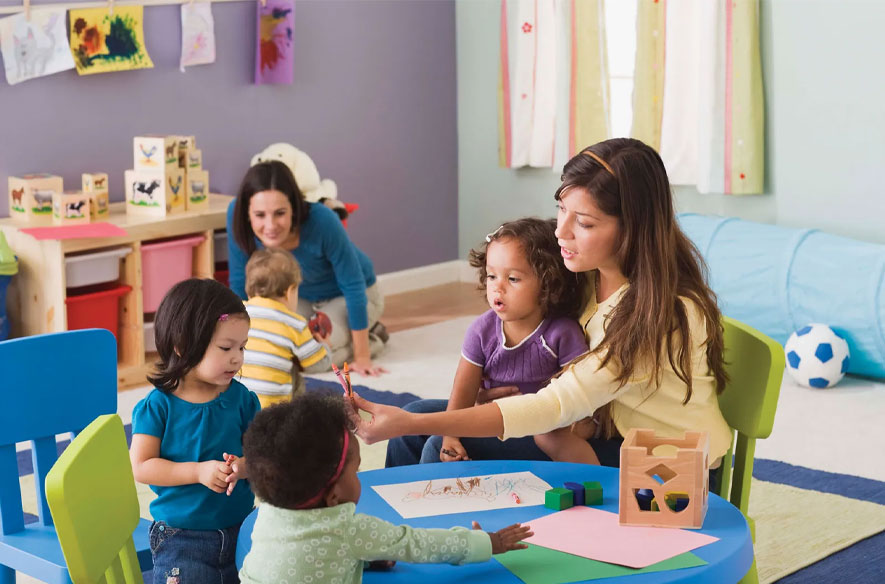
Traditional preschool follows a more conventional model, with a set daily schedule, teacher led lessons, and activities grouped by age. Children typically move through circle time, art, snack, outdoor play, and story time in a predictable sequence set by the teacher.
Common characteristics include:
- Same age classrooms
- Structured transitions between activities at set times
- Group instruction led primarily by the teacher
- Curriculum built around themes, holidays, or seasons
- More emphasis on following instructions and group participation
Montessori vs Traditional Preschool: Side by Side Comparison
| Feature | Montessori | Traditional Preschool |
|---|---|---|
| Classroom structure | Mixed age groups | Same age groups |
| Learning pace | Child led, self paced | Teacher led, fixed pace |
| Daily schedule | Flexible work periods | Structured time blocks |
| Materials | Hands on, self correcting | Worksheets and group activities |
| Teacher role | Guide and observer | Primary instructor |
| Focus | Independence, practical life, sensory learning | Group participation, following a set curriculum |
| Discipline style | Natural consequences, redirection | Rules and rewards set by the teacher |
What Are the Benefits of Montessori for Toddlers?
Montessori supports independence, self regulation, and hands on problem solving earlier than many traditional programs, because children choose their own activities and work through them without constant redirection.
Parents often notice these benefits within the first few months:
- Stronger independence. Children learn to dress themselves, pour their own snack, and clean up after activities without being told.
- Better focus. Long work periods with self chosen activities tend to build longer attention spans than short, teacher paced lessons.
- Early academic exposure. Materials for counting, letter recognition, and early reading are built into daily play rather than saved for formal lessons.
- Social development across ages. Mixed age classrooms let younger children learn from older peers and older children build leadership by helping younger ones.
- Calm, orderly environment. Montessori classrooms are intentionally organized so children know where materials belong, which reduces overstimulation.
Does My Child Need to Be a Certain Personality Type for Montessori?
No, but children who prefer structure and predictability sometimes need more support adjusting to the open ended format at first. Most children adapt within a few weeks as they get used to choosing their own work and moving at their own pace. Teachers trained in the Montessori method are experienced at helping reluctant or more structure seeking children ease into the environment gradually.
Common Mistakes Parents Make When Choosing a Preschool
- Choosing based on price alone. Cost matters, but the daily environment and teacher to child ratio affect a child’s experience far more than a few dollars a week.
- Not touring in person. Photos and websites cannot show you how a classroom actually feels during a normal school day.
- Ignoring licensing status. Always confirm a program is licensed and inspected according to state childcare regulations before enrolling.
- Assuming Montessori means no structure. Montessori classrooms are highly structured, just organized around child choice instead of a fixed group schedule.
- Overlooking meals and daily routine. Full day programs should include planned meals, rest time, and outdoor time, not just academic activities.
How Do I Know Which Option Is Right for My Child?
The right choice depends on how your child learns best and what kind of daily rhythm fits your family. If your child is naturally curious, enjoys exploring at their own pace, and does well with fewer rigid transitions, a Montessori environment is often a strong fit. If your child thrives on predictable routines and enjoys group activities led by an adult, a traditional program may feel more comfortable at first.
A short trial period or a tour where you observe an actual class in session is usually the best way to see how your child responds to each environment.
Key Takeaways
- Montessori uses child led learning with mixed age classrooms and hands on materials.
- Traditional preschool uses teacher led group instruction with same age classrooms and a fixed schedule.
- Montessori tends to build independence and longer attention spans earlier through self paced work.
- Neither approach is universally better. The right fit depends on your child’s temperament and your family’s routine.
- Always confirm licensing, meal plans, and daily structure before enrolling in any program.
Frequently Asked Questions
Is Montessori better than traditional preschool?
Neither is universally better. Montessori tends to suit children who thrive with independence and self paced exploration, while traditional preschool often suits children who prefer structured routines and group led activities. The best choice depends on your child’s personality and learning style.
At what age can a child start Montessori?
Most Montessori home daycare and early learning programs accept children starting around age two, once they can safely participate in a mixed age classroom setting. Some Montessori infant and toddler programs start even earlier, depending on the provider.
Do Montessori kids do well in traditional kindergarten?
Yes, research and long term studies generally show Montessori educated children transition well into traditional kindergarten, often arriving with stronger independence, focus, and early academic skills. Many adapt quickly to structured classroom routines because they are already used to following classroom norms.
Is Montessori more expensive than daycare?
Pricing varies by provider and location rather than by method alone. Home based Montessori programs are often comparably priced to traditional daycare centers, especially when meals, materials, and small group instruction are included in the cost.
What is the teacher’s role in a Montessori classroom?
A Montessori teacher acts as a guide who observes each child, introduces new materials when the child is ready, and steps back to let the child work independently, rather than leading every activity from the front of the room.
Can a child switch from traditional preschool to Montessori?
Yes, most children adjust within a few weeks of consistent attendance. Some may need extra encouragement to get comfortable choosing their own activities if they are used to a fully teacher directed schedule.
Is Montessori only for gifted children?
No, this is a common misconception. Montessori is designed for children of all learning styles and paces. The self paced structure allows each child to work at a level that matches their own development rather than a fixed grade level expectation.
Conclusion
Both Montessori and traditional preschool can support a strong foundation for early learning, but they get there in very different ways. Montessori leans on independence, hands on materials, and self paced exploration, while traditional preschool relies on structured, teacher led group activities. The best way to find the right fit is to see a classroom in action and ask how each program supports your child’s specific needs.
If you are exploring Montessori education for your toddler or preschooler in Las Vegas, Little Einsteins Montessori and Daycare LLC offers a licensed, home based Montessori environment with small group attention, daily meals, and hands on learning built into every day. Schedule a tour to see how the Montessori method works in person and find out if it’s the right fit for your child.